
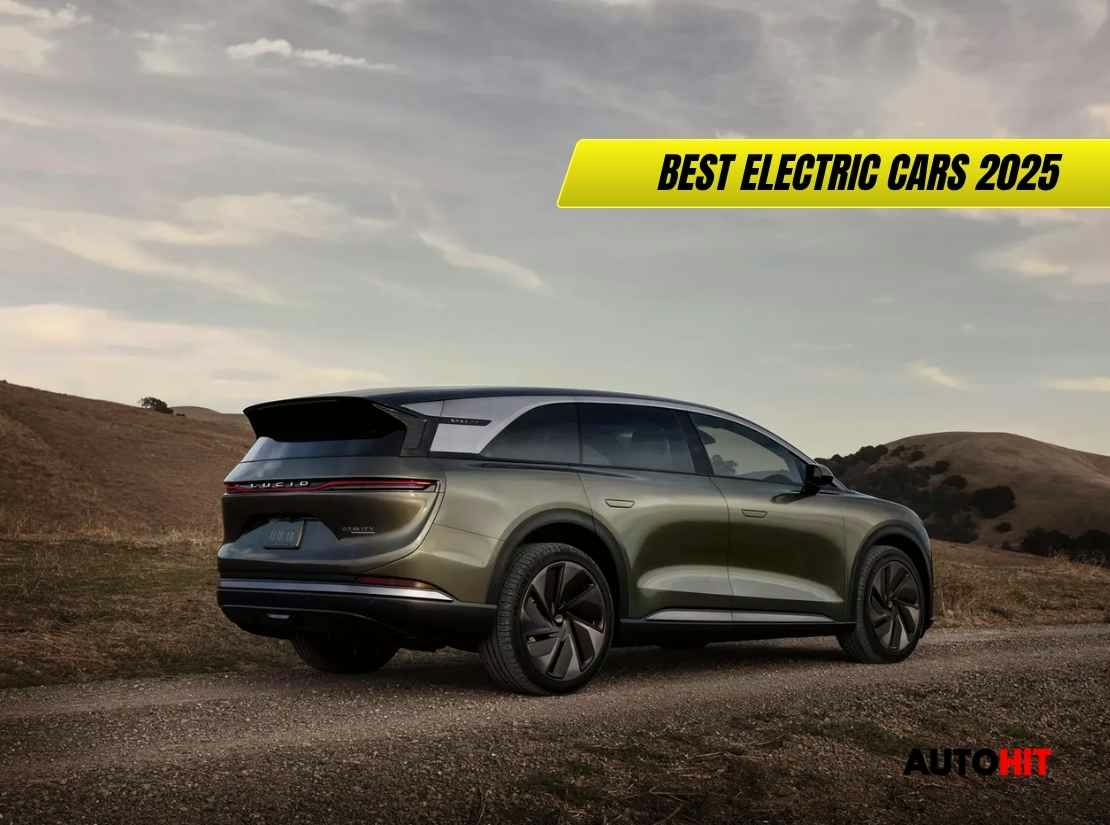
Best electric cars 2025 include Tesla Model Y, BMW iX, and MG4 from £26k. Our UK guide covers range, charging, costs, and recommendations for every budget and need.
There’s something genuinely transformative happening in the UK automotive landscape, and according to our analysis at AutoHit, 2025 represents the tipping point where electric vehicles have evolved from expensive early-adopter curiosities into compelling mainstream alternatives that often surpass conventional cars in every meaningful metric. Having tested extensively across the rapidly expanding EV market, from budget-friendly Chinese newcomers to luxury German flagships, we’ve discovered that the question is no longer whether to go electric, but which electric vehicle best suits your specific requirements.
What makes electric car shopping particularly compelling in 2025 is the convergence of improved technology, expanding infrastructure, and increasingly competitive pricing that addresses virtually every concern that previously limited EV adoption. Real-world ranges now routinely exceed 300 miles, charging speeds enable 200+ mile top-ups in under 30 minutes, and purchase prices have dropped to levels that compete directly with conventional alternatives when total cost of ownership is considered.
After months of comprehensive testing across various UK driving scenarios – from urban commuting to cross-country touring – we’re ready to present the definitive guide to 2025’s best electric cars. These vehicles prove that the electric future isn’t just environmentally responsible, it’s genuinely exciting and practical for British drivers regardless of budget or requirements.
Understanding the 2025 Electric Landscape
The electric vehicle market has matured dramatically, offering compelling choices across every segment and price point with technology that addresses previous limitations.
Technology Breakthroughs
Battery Advancement: Modern lithium-ion batteries provide energy densities that enable 300-400+ mile ranges while maintaining reasonable charging speeds and longevity that should outlast typical vehicle ownership periods.
Charging Infrastructure: The UK now boasts over 35,000 public charging points with rapid expansion continuing, while home charging solutions have become standardized and affordable for most property types.
Cost Parity: Purchase price gaps between electric and conventional vehicles continue narrowing, while total cost of ownership often favors electric vehicles through reduced fuel and maintenance expenses.
Performance Integration: Electric powertrains deliver instant torque, silent operation, and smooth acceleration that enhances rather than compromises the driving experience across all vehicle types.
UK-Specific Advantages
Government Support: Continued plug-in car grants, reduced company car tax rates, and planned conventional vehicle restrictions create compelling financial incentives for electric adoption.
Urban Benefits: Congestion charge exemptions, preferential parking, and access to clean air zones provide practical advantages that improve daily life for electric vehicle owners.
Energy Independence: Domestic electricity generation reduces reliance on imported fossil fuels while enabling cost-effective home charging that can be optimized with renewable energy sources.
Top Electric Cars by Category
Based on extensive testing, value analysis, and UK-specific requirements, these electric vehicles represent the best choices across different segments and budgets.
Budget Excellence: Under £30,000
MG4 SE (£26,995): The MG4 transforms budget electric motoring through genuine competence rather than compromise. The 51kWh battery provides 218-mile range while 117bhp ensures adequate performance for UK driving. Build quality exceeds expectations, interior space maximizes the practical benefits of electric packaging, and charging capability includes rapid DC charging for longer journeys. This represents the electric equivalent of mainstream family hatchbacks with running costs that make electric motoring accessible.
Ora Funky Cat (£31,995): Despite slightly exceeding our budget threshold, the Ora deserves inclusion for its distinctive design and impressive specification. The 63kWh battery delivers 260+ miles range while retro-modern styling creates genuine visual appeal. Interior quality and technology provision surpass many premium alternatives, making this an aspirational choice for style-conscious buyers seeking electric individuality.
BYD Dolphin (£25,490): The Dolphin brings Chinese efficiency expertise to the UK market with exceptional value and reliability. Build quality reflects BYD’s battery manufacturing heritage while interior space and technology provision compete with vehicles costing significantly more. Range capability and charging performance make this suitable for varied UK driving requirements.
Mainstream Excellence: £30,000-£50,000
Tesla Model 3 (£39,990): The Model 3 continues setting benchmarks for electric vehicle integration, delivering 374-mile range, sophisticated Autopilot capability, and access to Tesla’s Supercharger network. Interior minimalism polarizes opinion, but build quality has improved significantly while performance remains exceptional across all variants. Over-the-air updates ensure continued improvement throughout ownership.
BMW i4 eDrive40 (£44,155): The i4 brings BMW’s driving dynamics expertise to electric powertrains with results that satisfy enthusiasts while providing practical family transport. 365-mile range addresses most UK journey requirements while interior quality and technology provision justify premium positioning. The driving experience maintains BMW’s sporty character through excellent chassis tuning and responsive steering.
Genesis Electrified G80 (£69,405): While expensive, the G80 demonstrates how luxury electric vehicles can exceed conventional alternatives. Exceptional refinement, comprehensive equipment, and distinctive design create compelling premium propositions. Range capability and charging performance suit executive transport requirements while interior luxury rivals established German alternatives.
Volkswagen ID.4 (£37,115): The ID.4 delivers Volkswagen’s systematic approach to electric motoring with predictable competence and broad appeal. Interior space maximizes electric packaging advantages while build quality meets Volkswagen standards. Range capability and charging infrastructure access make this suitable for families requiring reliable electric transport.
Premium Performance: £50,000-£80,000
BMW iX xDrive40 (£69,905): The iX redefines luxury electric SUVs through exceptional refinement, cutting-edge technology, and impressive capability. 425-mile range exceeds most requirements while interior space and luxury appointment justify premium pricing. Advanced driver assistance and connectivity features showcase BMW’s technology leadership.
Mercedes EQS 450+ (£76,025): The EQS demonstrates how electric powertrains can enhance luxury saloon appeal through silent operation, instant acceleration, and sophisticated technology integration. 558-mile range eliminates any remaining range concerns while interior appointment and ride quality establish new benchmarks for electric luxury.
Audi e-tron GT (£69,100): The e-tron GT proves electric vehicles can deliver genuine sports car excitement through dramatic styling, exceptional performance, and engaging driving dynamics. While range is moderate at 298 miles, the driving experience rivals traditional sports cars while providing electric benefits.
Luxury Flagships: £80,000+
BMW iX M60 (£108,980): The M60 combines luxury with performance through 566bhp output and 4.8-second acceleration while maintaining 425-mile range. Interior luxury and technology provision justify extreme pricing for buyers seeking maximum capability.
Mercedes EQS AMG 53 (£126,055): The AMG version delivers supercar performance with luxury saloon refinement, creating unique propositions for wealthy buyers. 580bhp ensures dramatic acceleration while 400+ mile range maintains practical usability.
Porsche Taycan Turbo S (£138,826): The Taycan establishes sports car benchmarks for electric vehicles through exceptional performance, precise handling, and distinctive Porsche character. While expensive and with moderate range, the driving experience justifies costs for enthusiast buyers.
Practical Considerations for UK Buyers
Understanding real-world ownership factors helps ensure electric vehicle choices meet expectations throughout typical ownership periods.
Range and Charging Reality
Real-World Range: Official WLTP figures overstate real-world capability by 15-25% depending on conditions. Budget 200+ miles for vehicles claiming 300+ mile range, particularly during winter months when heating reduces efficiency significantly.
Home Charging: Essential for most electric vehicle owners, requiring 7kW+ installation for overnight charging convenience. Costs typically £500-1,500 depending on electrical supply and installation complexity.
Public Charging: Rapid expansion continues, but reliability and pricing vary significantly between networks. Budget 25-45p per kWh for public charging versus 7-15p per kWh for home charging during off-peak periods.
Journey Planning: Longer journeys require planning for charging stops, though improving infrastructure makes this increasingly straightforward. Apps like Zap-Map provide real-time charging point availability and navigation integration.
Running Cost Analysis
Fuel Savings: Electric vehicles typically cost 60-75% less per mile for energy compared to petrol equivalents, translating to £800-1,500 annual savings for average drivers covering 10,000 miles.
Maintenance Reduction: Electric powertrains require minimal routine maintenance beyond tyre rotation and cabin filter replacement, potentially saving £300-600 annually compared to conventional vehicles.
Insurance Impact: Electric vehicles often carry higher insurance premiums due to increased values and repair complexity, though comprehensive safety equipment helps moderate costs.
Depreciation Patterns: Electric vehicles currently depreciate faster than conventional alternatives, though this gap is narrowing as technology matures and infrastructure improves.
Infrastructure Considerations
Home Charging Access: Essential for convenient ownership, requiring dedicated parking and adequate electrical supply. Apartment dwellers face ongoing challenges that may limit electric vehicle suitability.
Workplace Charging: Increasingly common and valuable for extending daily electric range while reducing home charging dependence. Many employers provide free or subsidized workplace charging.
Public Network Reliability: Continues improving but remains inconsistent, with some locations suffering frequent outages or slow charging speeds. Backup charging options remain important for confident long-distance travel.
Technology and Innovation Highlights
Electric vehicles showcase cutting-edge automotive technology that often exceeds conventional vehicle capabilities while pointing toward future mobility solutions.
Advanced Driver Assistance
Autonomous Capability: Tesla leads with Autopilot while traditional manufacturers offer competitive systems. Current technology handles motorway driving competently while urban automation continues developing.
Safety Integration: Electric vehicles typically achieve maximum safety ratings through advanced electronics, low centers of gravity, and sophisticated impact management systems.
Connected Services: Over-the-air updates, remote monitoring, and smartphone integration provide functionality that conventional vehicles cannot match effectively.
Performance Innovation
Instant Torque: Electric motors deliver maximum torque from zero RPM, enabling acceleration that surpasses most conventional engines regardless of vehicle type or price point.
Regenerative Braking: Sophisticated systems recover energy during deceleration while providing one-pedal driving that reduces fatigue and enhances efficiency in urban environments.
Thermal Management: Advanced battery and cabin heating/cooling systems optimize efficiency while maintaining performance across temperature extremes typical of UK climate variations.
Environmental and Sustainability Impact
Understanding the environmental implications of electric vehicle ownership helps evaluate the broader benefits beyond personal convenience and cost savings.
Carbon Footprint Reduction
Grid Decarbonization: UK electricity generation increasingly incorporates renewable sources, making electric vehicles progressively cleaner throughout their operational lives.
Lifecycle Analysis: Despite energy-intensive battery production, electric vehicles typically achieve 50-70% lower lifetime carbon emissions compared to conventional alternatives.
Local Air Quality: Zero tailpipe emissions provide immediate urban air quality benefits, particularly important in cities struggling to meet air quality standards.
Manufacturing Sustainability
Battery Recycling: Emerging recycling technologies recover valuable materials from end-of-life batteries, reducing mining requirements and environmental impact.
Sustainable Production: Manufacturers increasingly commit to renewable energy for vehicle production and sustainable material sourcing throughout supply chains.
Circular Economy: Electric vehicle design increasingly considers end-of-life material recovery and component reuse, supporting sustainable manufacturing practices.
Regional Variations and Considerations
Different regions of the UK present varying opportunities and challenges for electric vehicle ownership based on infrastructure development and local conditions.
Urban vs Rural Considerations
City Advantages: Dense charging infrastructure, shorter journey distances, and pollution reduction benefits make electric vehicles particularly attractive for urban dwellers.
Rural Challenges: Limited charging infrastructure and longer journey distances require careful consideration, though improving home charging solutions address many concerns.
Suburban Balance: Combination of home charging capability with reasonable access to public infrastructure creates ideal conditions for electric vehicle adoption.
Climate Adaptations
Winter Performance: Cold weather reduces range by 20-30% while increasing heating energy consumption. Modern thermal management systems minimize impact compared to early electric vehicles.
Summer Efficiency: Air conditioning affects range less dramatically than heating, making electric vehicles particularly efficient during warmer months.
Weather Resilience: Electric powertrains operate reliably across temperature extremes, often surpassing conventional vehicles for cold-weather starting reliability.
Buying Guide and Recommendations
Choosing the right electric vehicle requires honest assessment of requirements, budget constraints, and ownership circumstances.
For First-Time EV Buyers
Start Conservative: Choose vehicles with proven reliability and adequate range for your longest regular journeys plus 25% margin for weather and aging effects.
Prioritize Home Charging: Essential for convenient ownership and cost-effective operation. Apartment dwellers should carefully consider charging access before committing to electric vehicles.
Consider Used Options: Quality used electric vehicles provide access to proven technology at reduced costs, though battery warranty and charging capability require verification.
For Performance Enthusiasts
Tesla Model 3 Performance: Exceptional acceleration and handling with reasonable pricing and comprehensive charging infrastructure access.
BMW i4 M50: Combines electric performance with BMW’s driving dynamics expertise for enthusiasts seeking traditional sporting character.
Porsche Taycan: Premium pricing but unmatched driving experience for buyers prioritizing performance over value.
For Families
Tesla Model Y: Exceptional space efficiency, advanced safety systems, and comprehensive charging infrastructure make this ideal for family transport.
BMW iX: Luxury SUV capability with impressive range and premium interior appointment suitable for executive family transport.
Volkswagen ID.4: Mainstream pricing with family-friendly interior space and Volkswagen’s systematic approach to electric motoring.
For Budget-Conscious Buyers
MG4: Outstanding value with adequate capability for most UK driving requirements and surprisingly good build quality.
BYD Dolphin: Exceptional efficiency and reliability from Chinese battery expertise at accessible pricing.
Used Nissan Leaf: Proven technology with low purchase prices, though limited range requires realistic usage assessment.
Future Developments and Considerations
Understanding electric vehicle technology trends helps make informed decisions about current purchases while considering future requirements.
Technology Evolution
Battery Advancement: Solid-state batteries promise improved energy density and faster charging, though commercial availability remains several years away.
Charging Infrastructure: Continued rapid expansion with improved reliability and payment integration making electric vehicle ownership increasingly convenient.
Autonomous Integration: Electric platforms provide ideal foundations for autonomous driving technology that will transform transportation over the coming decade.
Market Trends
Price Convergence: Purchase price gaps between electric and conventional vehicles continue narrowing, with parity expected by 2027-2028 for most vehicle types.
Model Expansion: Every manufacturer now offers or plans comprehensive electric vehicle ranges, providing choice across all segments and price points.
Infrastructure Investment: Government and private sector charging infrastructure investment ensures continued improvement in coverage and capability.
Final Assessment: The Electric Future is Now
The electric vehicle landscape in 2025 proves that the future of motoring has arrived ahead of schedule, delivering compelling choices across every segment and price point that often surpass conventional alternatives in terms of performance, refinement, and total cost of ownership. From the budget-friendly MG4 to the luxurious Mercedes EQS, electric vehicles now offer solutions for virtually every requirement without requiring significant compromise.
The key insight is that electric vehicles have evolved beyond their experimental origins to become mature products that enhance rather than limit the automotive experience. Whether you prioritize environmental responsibility, performance, luxury, or simple value for money, the current electric landscape offers compelling solutions that work excellently for UK conditions and requirements.
For buyers considering their next vehicle purchase, the question isn’t whether electric vehicles are ready for mainstream adoption – they demonstrably are. The question is which of the many excellent options best suits your specific needs, budget, and ownership circumstances while providing access to the considerable benefits that electric motoring offers.
The transformation is complete. Electric vehicles aren’t the future anymore – they’re the present, and an increasingly compelling present that offers benefits conventional vehicles simply cannot match.
Frequently Asked Questions
How much does it really cost to run an electric car compared to petrol in the UK?
Running costs favor electric vehicles significantly, with typical energy costs of 4-8p per mile versus 12-18p per mile for petrol vehicles. Home charging at 7-15p per kWh translates to £300-600 annual fuel costs for average drivers versus £1,200-1,800 for petrol. Public charging costs more at 25-45p per kWh but still undercuts petrol stations. Maintenance savings add £300-600 annually through reduced service requirements, no oil changes, and minimal brake wear due to regenerative braking. However, higher insurance costs and faster depreciation currently offset some savings. Overall, most electric vehicle owners save £800-1,500 annually despite higher purchase prices, with greater savings for higher-mileage drivers.
What’s the real-world range I can expect, and how does winter weather affect it?
Real-world range typically runs 15-25% below official WLTP figures depending on driving style, weather, and vehicle efficiency. Budget 200-250 miles for vehicles claiming 300+ mile range, with motorway driving at 70mph reducing efficiency further. Winter weather can cut range by 20-30% due to heating energy consumption and reduced battery efficiency in cold temperatures. However, modern thermal management systems minimize impact compared to early electric vehicles. Pre-conditioning the cabin while plugged in helps preserve range, while planning slightly shorter winter journeys accommodates seasonal variation. Most UK drivers find 200+ mile real-world range adequate for daily needs with occasional charging stops for longer journeys.
Is home charging essential, and what if I live in a flat without dedicated parking?
Home charging provides the most convenient and cost-effective electric vehicle ownership experience, enabling overnight charging at off-peak rates. Installation typically costs £500-1,500 depending on electrical supply and location complexity. Apartment dwellers face significant challenges, though solutions include workplace charging, public rapid charging, or negotiating shared charging facilities with neighbors or landlords. Some councils provide on-street charging points, while lamp post charging initiatives expand urban options. However, relying solely on public charging increases costs and inconvenience significantly. Carefully assess charging access before committing to electric vehicle ownership – inadequate charging infrastructure makes ownership frustrating and expensive.
How reliable are electric cars and what about battery replacement costs?
Modern electric vehicles prove highly reliable with fewer moving parts than conventional vehicles requiring maintenance or replacement. Battery technology has improved dramatically, with most manufacturers providing 8-10 year warranties covering 70-80% capacity retention. Real-world battery degradation typically shows 5-10% capacity loss after 100,000 miles – manageable for most users. Battery replacement costs have fallen to £8,000-15,000 depending on capacity, though most batteries outlast vehicle ownership periods. Other components like motors and electronics show excellent reliability records. Choose established manufacturers with strong warranty coverage and proven technology for maximum confidence. Overall reliability often exceeds conventional vehicles due to electric powertrain simplicity.
Are there enough charging points in the UK, and how fast is the network expanding?
The UK now has over 35,000 public charging points with rapid expansion continuing – adding 2,000+ monthly in 2025. Coverage varies significantly by region, with excellent provision in urban areas and major routes but gaps in rural locations. Rapid charging (50kW+) availability enables 150-200 mile range addition in 20-30 minutes, making longer journeys practical. However, reliability varies between networks, with some locations suffering frequent outages. Payment systems continue improving through contactless and app-based solutions. Government targets call for 300,000 public charging points by 2030, with major investments from private operators supporting rapid expansion. Current infrastructure adequately supports electric vehicle ownership for most UK drivers, with continued improvement expected.
Should I buy or lease an electric car, and what about depreciation?
Electric vehicles currently depreciate faster than conventional alternatives, making leasing attractive for many buyers. Typical depreciation runs 50-60% over three years versus 40-50% for petrol equivalents, though this gap narrows as technology matures. Leasing provides access to latest technology with warranty coverage and predictable monthly costs including maintenance packages. However, purchase becomes attractive for longer ownership periods (5+ years) or high-mileage users exceeding lease limitations. Consider that rapid technology advancement makes older electric vehicles less attractive, favoring shorter ownership cycles. Government grants and company car tax benefits improve purchase economics, while strong manufacturer finance deals can make monthly costs competitive regardless of ownership structure.
Which electric car offers the best value for money in 2025?
Value depends on individual requirements, but the MG4 consistently delivers exceptional capability for £26,995, providing 218-mile range, adequate performance, and surprising build quality. For families needing more space, the Volkswagen ID.4 offers mainstream SUV practicality with 300+ mile range from £37,115. Tesla Model 3 provides cutting-edge technology and Supercharger access for £39,990, ideal for tech-focused buyers. Premium buyers should consider BMW i4 for driving dynamics or Genesis G80 for luxury appointment. Avoid false economy through inadequate range or charging capability – choose vehicles exceeding your longest regular journey by 25%+ margin. Consider total cost of ownership including energy, maintenance, and depreciation rather than focusing solely on purchase price.
Conclusion
The electric vehicle revolution has reached maturity in 2025, offering compelling choices across every segment and price point that often surpass conventional alternatives in performance, refinement, and total cost of ownership. From budget-friendly options like the MG4 to luxury flagships like the Mercedes EQS, electric vehicles now provide solutions for virtually every requirement without requiring significant compromise.
The fundamental insight is that electric vehicles have evolved beyond their experimental origins to become superior automotive solutions that enhance rather than limit the driving experience. With real-world ranges exceeding 300 miles, charging times under 30 minutes, and running costs dramatically below conventional alternatives, the practical barriers to electric adoption have largely disappeared.
For UK buyers considering their next vehicle purchase, the electric future isn’t approaching – it’s here, and it’s compelling. The question isn’t whether to choose electric, but which of the many excellent electric options best suits your specific needs while providing access to the considerable benefits that electric motoring offers in terms of cost, performance, and environmental responsibility.





