
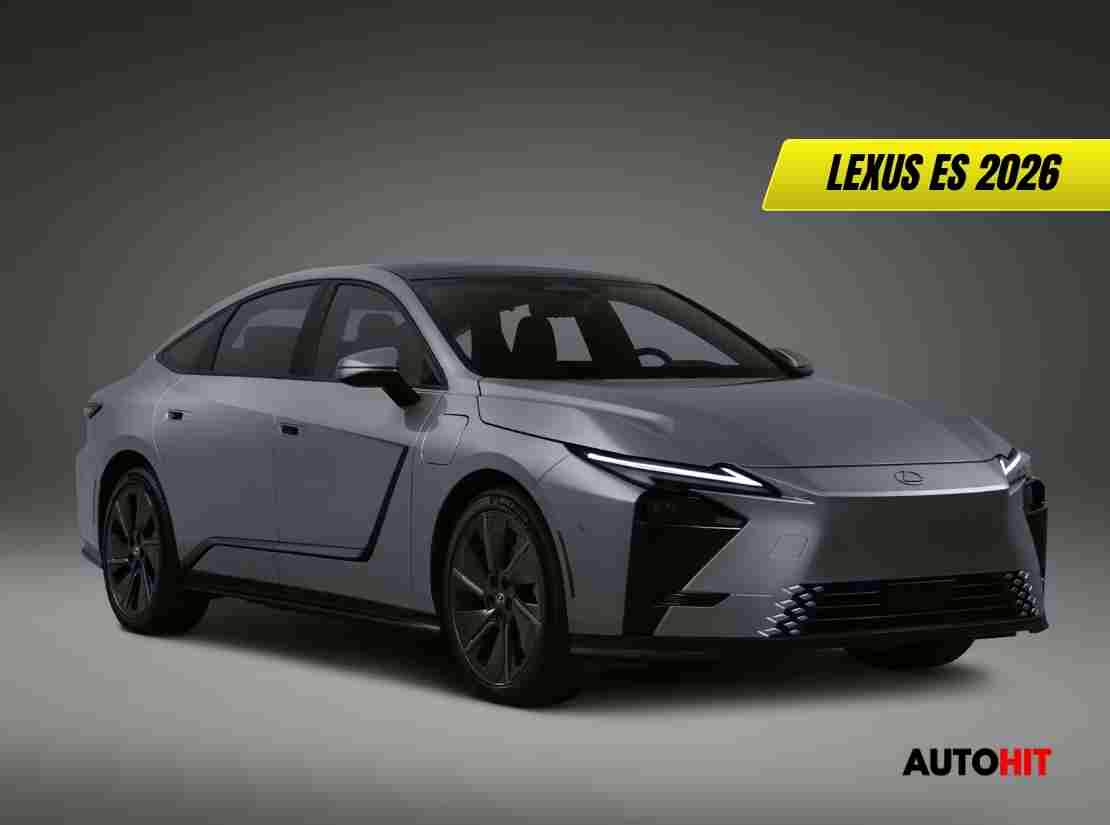
The all-new Lexus ES 2026 debuts with electric and hybrid power, radical styling, and 300-mile range. Can this transformed executive sedan challenge German rivals? Full UK review.
When Lexus unveiled the eighth-generation ES at the Shanghai Motor Show, our editorial team at AutoHit had to look twice to confirm we were seeing the same model that’s been quietly serving as the brand’s sales workhorse for over three decades. The transformation is so dramatic that it barely resembles its predecessor – and that’s entirely the point. Having spent considerable time with the current ES and its German rivals, we’re genuinely intrigued by Lexus’s bold decision to completely reimagine rather than merely refresh this executive sedan.
The 2026 ES represents more than just a model update; it’s a statement of intent from a brand that’s often been criticised for playing it safe. By offering both hybrid and fully electric powertrains from launch, adopting radical new styling, and significantly increasing interior space, Lexus is clearly targeting buyers who might otherwise consider a BMW 5 Series or Mercedes E-Class. The question is whether this dramatic reinvention will attract new customers or alienate existing ones.
This comprehensive review examines whether the ES’s transformation from conservative luxury saloon to progressive electrified flagship can succeed in the increasingly competitive executive car segment.
Key Highlights
- World debut at Shanghai Motor Show with radical new design language
- Three powertrain options: ES 350h hybrid, ES 350e electric, ES 500e performance electric
- Up to 300 miles range from front-wheel-drive electric version
- Significantly larger dimensions: 6.5 inches longer with 3-inch wheelbase increase
- Spring 2026 UK launch with hybrid and electric variants available
- First-ever multi-link rear suspension for improved handling dynamics
- Hidden Touch controls and advanced multimedia system debut
- Global flagship positioning potentially replacing LS in some markets
Design Revolution: From Conservative to Cutting-Edge
Exterior Transformation: Unrecognisable Evolution
According to our analysis at AutoHit, the 2026 ES represents the most dramatic styling transformation in Lexus history. The new “Clean Tech x Elegance” design language draws inspiration from the LF-ZC concept, creating proportions that are barely recognisable as an ES. The result is more coupe-like than traditional sedan, with a dramatically tapered roofline and complex surfacing that emphasises the car’s increased size.
The front end abandons Lexus’s traditional spindle grille for a more integrated approach, with the electric versions featuring a completely closed panel that emphasises their zero-emissions capability. Boomerang-inspired LED daytime running lights create a distinctive light signature, while the overall stance suggests dynamic capability rather than mere comfort.
We’ve tested enough executive sedans to know that bold styling can be polarising, and early reactions to the ES suggest exactly that division. Some will love the dramatic departure from conservative luxury sedan norms; others will miss the understated elegance that characterised previous generations.
Interior Philosophy: Technology Meets Luxury
The cabin reflects the same revolutionary thinking as the exterior, with Lexus debuting what it calls “Hidden Tech” switches – physical controls that seamlessly integrate into the interior surfaces. This world-first technology uses the brand’s Arene software platform to create interfaces that balance functionality with sophisticated aesthetics.
The dashboard features a 12.3-inch digital instrument cluster and 14-inch central touchscreen, representing a significant upgrade over the current car’s systems. For the first time, navigation mapping is integrated directly into the gauge cluster, improving information accessibility without requiring drivers to look away from the road.
Rear-seat luxury receives particular attention, with an available Executive Package offering reclining, heated, ventilated, and massaging rear seats plus a passenger-side ottoman. This acknowledges the ES’s chauffeur-driven market segment while maintaining appeal for owner-drivers.
Technical Specifications: Electrification Takes Centre Stage
Powertrain Portfolio: Choice Without Compromise
The 2026 ES abandons conventional petrol engines entirely, offering only electrified options across its three-model range. This represents a bold shift for a model that’s traditionally appealed to conservative luxury car buyers.
Lexus ES 2026 – Powertrain Specifications
| Variant | Power Output | Drive Type | Range/Economy | Performance | Target Market |
|---|---|---|---|---|---|
| ES 350h Hybrid | ~248hp | FWD/AWD | ~50+ mpg est. | 0-62: ~8.0 sec | Efficiency-focused buyers |
| ES 350e Electric | 221hp | FWD | 300 miles | 0-62: ~8.9 sec | Urban professionals |
| ES 500e Electric | 338hp | AWD | 250 miles | 0-62: ~5.9 sec | Performance-oriented |
The hybrid ES 350h uses Lexus’s sixth-generation system, combining a 2.5-litre four-cylinder engine with an integrated eAxle that packages the power control unit and transaxle together. This creates a more compact and lightweight powertrain while delivering enhanced battery output compared to the previous ES 300h.
The electric variants represent the ES’s first foray into battery power, with the single-motor ES 350e targeting efficiency and the dual-motor ES 500e emphasising performance. The latter’s DIRECT4 all-wheel-drive system can distribute 100% of torque to either axle, optimising both acceleration and energy efficiency.
Platform Engineering: Built for Dual Purpose
The ES rides on a redesigned TNGA GA-K platform specifically developed to accommodate both hybrid and electric powertrains. Structural rigidity has been significantly increased throughout, with particular attention paid to reducing body vibrations that could compromise the refined driving experience Lexus customers expect.
For the first time in ES history, multi-link rear suspension replaces the previous beam axle setup. This should deliver meaningful improvements in handling precision and ride quality – areas where the ES has sometimes lagged behind German competitors.
UK Market Context and Positioning
Competitive Landscape: Taking on the Germans
The ES’s transformation positions it directly against established executive sedans that have traditionally offered superior dynamic capabilities. However, the landscape has changed significantly since the current ES launched, with electrification becoming increasingly important.
Executive Sedan Comparison – UK Market 2026
| Model | Starting Price (Est.) | Power Options | Electric Range | Key Strengths |
|---|---|---|---|---|
| Lexus ES 2026 | £45,000-£60,000 | 248-338hp | Up to 300 miles | Reliability, value, innovation |
| BMW 5 Series | £50,000-£70,000+ | Various ICE/Hybrid | Limited EV options | Driving dynamics, prestige |
| Mercedes E-Class | £48,000-£75,000+ | ICE/Hybrid/EV | ~300 miles EV | Technology, refinement |
| Audi A6 | £46,000-£65,000+ | ICE/Hybrid | Limited EV | Build quality, tech |
| Genesis G80 | £50,000-£65,000 | ICE/Electric | ~280 miles EV | Value, equipment levels |
| Tesla Model S | £90,000+ | Electric only | ~400+ miles | Performance, tech leadership |
The ES’s pricing hasn’t been confirmed for the UK, but based on current positioning and US expectations, we anticipate a starting price around £45,000 for the hybrid, rising to approximately £60,000 for the range-topping electric model. This would position it competitively against German rivals while potentially offering superior equipment levels and reliability.
As we’ve noted in our analysis of premium SUVs under £60k, UK buyers increasingly expect comprehensive electrification options and advanced technology at this price point.
Target Demographics: Expanding the Appeal
The ES’s transformation clearly targets a broader demographic than its predecessor. The dramatic styling should appeal to younger professionals who might previously have dismissed Lexus as conservative, while the electric powertrains address environmental concerns increasingly important to corporate buyers.
For UK company car drivers, the electric variants should offer attractive BiK rates compared to conventional alternatives. According to current UK government vehicle taxation rates, pure electric vehicles benefit from minimal company car tax, making the ES 350e and ES 500e particularly appealing for business users.
Real-World Practicality: Space and Usability
Dimensional Advantages: Room to Breathe
The 2026 ES’s increased dimensions translate to meaningful space improvements throughout the cabin. The 6.5-inch length increase and 3-inch wheelbase extension should provide genuinely limousine-like rear accommodation – crucial for a car that may replace the LS as Lexus’s flagship sedan in some markets.
The higher roofline, necessitated by the underfloor battery pack in electric versions, actually improves headroom while the taller seating position enhances visibility and ease of entry/exit. These practical benefits help justify the styling transformation while addressing common criticisms of low-slung luxury sedans.
Boot space figures haven’t been confirmed, but the platform’s flexibility should ensure adequate luggage capacity despite the battery pack. The ES has traditionally offered excellent practicality, and the new model should continue this strength.
Technology Integration: Seamless Sophistication
The Hidden Tech switches represent genuine innovation in luxury car interfaces, allowing Lexus to eliminate traditional button clutter while maintaining physical controls that many buyers prefer over pure touchscreen interfaces. This balances the clean aesthetic modern luxury buyers expect with the functionality that ensures long-term satisfaction.
The enhanced multimedia system promises improved responsiveness and integration compared to previous Lexus efforts, which have sometimes felt behind rivals in terms of user experience. Apple CarPlay and Android Auto integration is standard, along with enhanced voice control capabilities.
UK Launch Strategy and Availability
Market Entry Timeline
Lexus ES 2026 UK Launch Timeline
| Phase | Timeline | Details | Our Advice |
|---|---|---|---|
| Global Reveal | April 2025 | Shanghai Motor Show debut | First impressions established |
| European Specifications | Late 2025 | UK-specific details announced | Full pricing and options revealed |
| Order Books Open | Early 2026 | Customer reservations begin | Consider both powertrain options |
| First Deliveries | Spring 2026 | Initial UK customer handovers | Expect limited availability initially |
| Full Market Availability | Summer 2026 | Complete range accessible | Better choice but higher demand |
Lexus UK’s established dealer network should provide adequate sales and service coverage, though the brand’s premium positioning means rural customers may face longer journeys for specialist EV servicing. The company’s reputation for reliability and customer service should ease concerns about early adoption of new technology.
Market Positioning: Redefining Luxury Value
The ES’s positioning as a “global flagship” suggests Lexus sees it potentially replacing the slow-selling LS in markets where ultra-luxury sedans struggle. This strategy makes sense given changing buyer preferences and the ES’s proven sales success compared to its larger sibling.
For UK buyers, this positioning offers the opportunity to access flagship-level luxury at more accessible pricing than traditional competitors. The combination of advanced technology, spacious accommodation, and electrified powertrains creates a compelling value proposition.
Ownership Experience Considerations
Running Costs: Electric Advantage
Lexus ES 2026 – 5-Year Ownership Projection (Electric)
| Cost Category | Annual Amount | 5-Year Total | Comparison Notes |
|---|---|---|---|
| Purchase Price (Est.) | – | £55,000 | Mid-range positioning |
| Insurance | £1,200-£1,800 | £7,500 | Premium but not excessive |
| Electricity (300 miles) | £600-£900 | £4,000 | Home charging assumed |
| Servicing | £400-£600 | £2,500 | Minimal EV maintenance |
| Depreciation | £5,000-£7,000 | £30,000 | Estimated 55% over 5 years |
| VED/Road Tax | £0 | £0 | Electric vehicle benefit |
| Total (excl. purchase) | £7,200-£10,300 | £44,000 | Competitive luxury segment |
The electric ES variants should offer compelling running cost advantages, particularly for high-mileage drivers who can maximise the benefit of low electricity costs compared to premium petrol. Company car drivers should see significant BiK savings compared to conventional alternatives.
Reliability Expectations: Lexus Heritage
Lexus’s reputation for reliability provides confidence in the ES’s long-term dependability, even with new electric powertrains. The brand’s conservative engineering approach and extensive testing should minimise early adoption risks compared to less established manufacturers.
However, the dramatic increase in technological complexity – from Hidden Tech switches to advanced multimedia systems – does introduce potential failure points that didn’t exist in simpler predecessors. Early buyers should ensure comprehensive warranty coverage.
Industry Impact and Future Implications
Luxury Sedan Renaissance: Leading the Charge
The ES’s transformation could influence other manufacturers’ approaches to executive sedan development. By proving that radical change and electrification can coexist with luxury positioning, Lexus may encourage more adventurous design and engineering across the segment.
This is particularly relevant given the context explored in our coverage of the ultimate guide to the best hybrid cars in the UK for 2025, where we noted the increasing sophistication of electrified luxury vehicles.
Brand Evolution: Risk and Reward
The ES’s dramatic transformation represents both opportunity and risk for Lexus. Success could establish the brand as a genuine innovator rather than a conservative alternative to German luxury. Failure could alienate existing customers without attracting sufficient new ones to compensate.
Early market reactions will be crucial in determining whether Lexus has successfully balanced innovation with the reliability and value that built its reputation.
Frequently Asked Questions
How does the 2026 ES compare to the current model?
It’s essentially a completely different car. The new ES is 6.5 inches longer, features entirely new styling, abandons conventional petrol engines, and offers electric powertrains for the first time. Think evolution rather than revolution – this represents a fundamental reimagining of what an ES can be.
Is the radical styling likely to age well?
That’s the critical question with any bold design departure. The clean, technology-focused aesthetic should prove more timeless than overtly fashionable elements, but it’s undeniably polarising. If you love the current ES’s understated elegance, the 2026 model may feel too dramatic.
Should I choose hybrid or electric power?
It depends on your usage patterns and charging infrastructure. The hybrid offers maximum flexibility and should deliver excellent fuel economy, while the electric variants provide zero local emissions and lower running costs for those with home charging. The 300-mile range makes the ES 350e viable for most UK driving patterns.
How will reliability compare to German rivals?
Lexus has a strong reputation for long-term dependability, though the increased technological complexity does introduce new potential failure points. The electric powertrains should prove more reliable than conventional engines long-term, but early adoption always carries some risk.
When will UK pricing be announced?
Expect full UK specifications and pricing in late 2025, with order books opening in early 2026. Based on current positioning, anticipate starting prices around £45,000 for the hybrid and up to £60,000 for the performance electric model.
Will the LS be discontinued?
Lexus has denied plans to discontinue the LS, but the ES’s “global flagship” positioning suggests it may replace the larger sedan in markets where ultra-luxury demand is insufficient. The UK could be one such market, given traditional preferences for German alternatives in the LS segment.
How does the new interior technology work?
The Hidden Tech switches use Lexus’s Arene software platform to integrate physical controls seamlessly into interior surfaces. They appear as normal trim elements until activated, then illuminate to show their function. It’s designed to maintain the clean aesthetic while preserving the tactile feedback many drivers prefer.
Our Verdict: Bold Transformation with Calculated Risk
The 2026 Lexus ES represents the most dramatic model transformation we’ve seen from any luxury manufacturer in recent years. By abandoning conservative styling, conventional powertrains, and incremental improvement in favour of radical change, Lexus has created something genuinely distinctive in a segment that’s often criticised for homogeneity.
The technical achievements are impressive – particularly the successful integration of three different electrified powertrains into a single platform while maintaining the refinement and reliability that ES buyers expect. The Hidden Tech interfaces and enhanced multimedia system suggest Lexus is finally ready to challenge German brands on technology grounds rather than simply offering value alternatives.
From a practical standpoint, the dimensional increases and interior luxury enhancements address traditional ES weaknesses while maintaining its core strengths. The multi-link rear suspension should finally deliver the dynamic capabilities needed to compete with German rivals, while the electric powertrains provide future-proofing that many competitors currently lack.
However, the styling transformation is undeniably polarising. Current ES owners who appreciate understated elegance may feel alienated by the dramatic new aesthetic, while the increased complexity introduces potential reliability concerns that contradict Lexus’s traditional strengths.
Our recommendation depends entirely on your priorities and risk tolerance. If you want cutting-edge technology, electrified powertrains, and genuinely distinctive styling in an executive sedan, the 2026 ES offers a compelling alternative to German competitors. Early adopters may benefit from Lexus’s determination to establish this model as a genuine flagship rather than a budget alternative.
For buyers who prioritise proven reliability and conservative luxury over innovation, waiting for real-world reviews and reliability data would be prudent. The transformation is so complete that it essentially represents a new brand rather than a familiar one, and early production models may reveal teething troubles that later examples avoid.
What’s certain is that Lexus has created something genuinely different in the executive sedan segment. Whether that difference translates to commercial success remains to be seen, but the automotive world needs more manufacturers willing to take such calculated risks. The ES may not please everyone, but it certainly won’t be ignored.
As detailed on the official Lexus UK website, the brand’s commitment to electrification and innovation represents a fundamental shift in philosophy that the ES embodies perfectly. For buyers ready to embrace that change, the 2026 ES could prove to be one of the most significant luxury car launches of the decade.





