
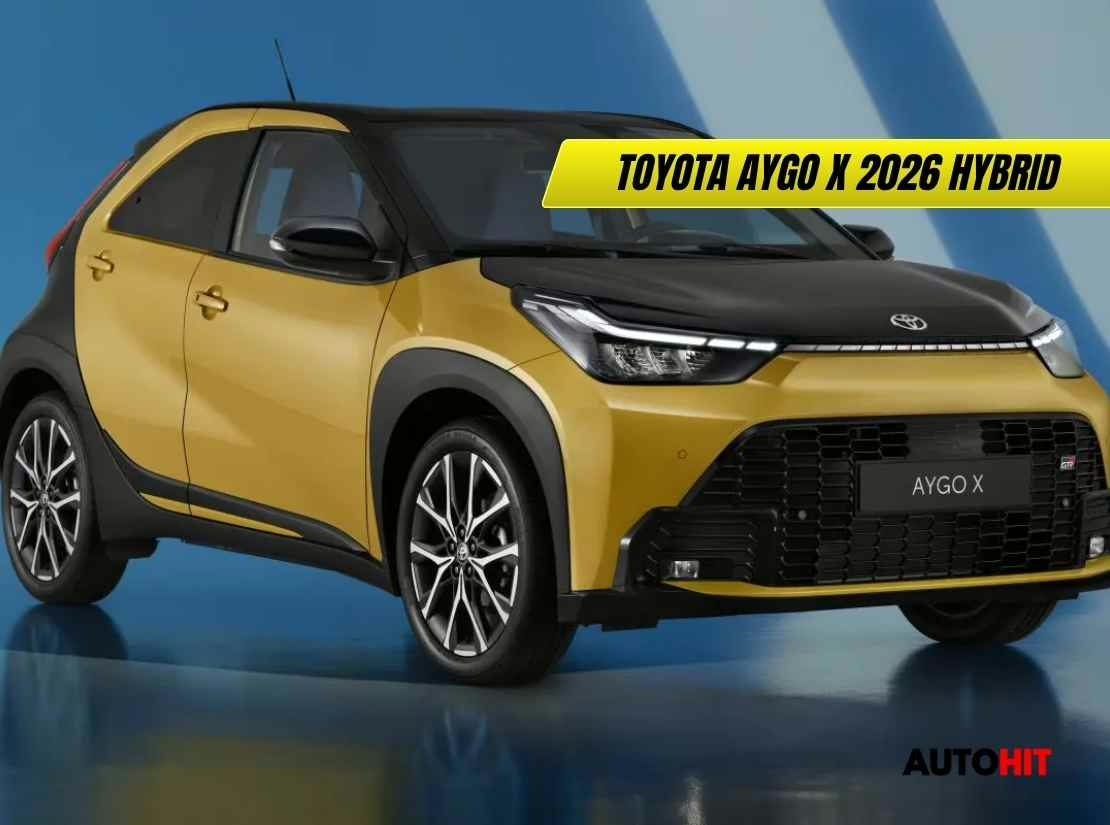
The 2026 Toyota Aygo X Hybrid transforms the city car with 114hp Yaris powertrain, 86g/km CO2, and GR Sport variant. Full UK specs, pricing from £19,000, and how it challenges Hyundai i10 dominance.
Toyota has just unveiled what could be the most significant transformation in city car history. The 2026 Aygo X Hybrid represents far more than a simple facelift – it’s a complete philosophical shift that sees Toyota’s smallest offering abandon its budget roots in favour of premium technology and environmental credentials. More importantly for UK buyers, it marks the first time hybrid technology has appeared in the city car segment, potentially reshaping expectations for what these urban runabouts can achieve.
Our team at AutoHit has been following the development of hybrid city cars for several years, and the Aygo X’s transformation couldn’t come at a more crucial time. With the Hyundai i10 dominating UK city car sales for the past two years and the segment facing pressure from both electric alternatives and larger small cars, Toyota needed something dramatic to reclaim relevance in this increasingly marginalised market.
The changes run deep. Toyota has completely re-engineered the Aygo X’s platform to accommodate the hybrid system from the larger Yaris, necessitating new front bodywork, extended overhangs, and sophisticated battery packaging. The result is a car that promises to be the cleanest non-plug-in vehicle on sale while delivering performance that embarrasses most rivals. However, this transformation comes at a cost – both financial and philosophical – that could fundamentally alter the city car landscape.
No products found.
Key Highlights
• Hybrid revolution: First full hybrid system in the city car segment, using the proven 1.5-litre unit from the Yaris with 114hp total output
• Substantial price increase: Expected UK pricing from £19,000 represents a £3,000 jump over the current model, moving beyond traditional city car territory
• Environmental leadership: Projected 86g/km CO2 emissions making it potentially the cleanest non-plug-in car available to UK buyers
• Performance transformation: 0-62mph in under 10 seconds – nearly 5 seconds faster than the current petrol-only model
• GR Sport debut: First time the Aygo X receives the performance treatment, with bespoke suspension tuning and exclusive Mustard paintwork
• Manual transmission farewell: All variants now feature Toyota’s e-CVT automatic, ending the manual option that helped keep costs down
Engineering Revolution: Yaris Technology in City Car Packaging
The 2026 Aygo X Hybrid’s most significant achievement is the successful integration of Toyota’s fourth-generation hybrid system into a package barely 3.7 metres long. This required substantial re-engineering that goes far beyond what Toyota initially describes as a “facelift.”
Powertrain Integration
The heart of the transformation is Toyota’s proven Hybrid 115 system, lifted directly from the current Yaris. This pairs a 1.5-litre Atkinson cycle petrol engine with an electric motor and sophisticated power management system to deliver a combined 114hp – a 60% increase over the current model’s anaemic 71hp output.
More impressive than the headline figures is the torque improvement. The hybrid system provides 144Nm compared to the current car’s 93Nm, transforming the Aygo X from a car that struggles with motorway gradients into something that can genuinely keep pace with modern traffic demands.
The engineering challenge involved completely redesigning the car’s packaging. The battery cells are positioned side-by-side under the rear seats in a longitudinal layout – a clever solution that maintains the same wheelbase and boot space as the outgoing model. The auxiliary 12-volt battery has been relocated under the boot floor, while cooling systems for the hybrid components required integration into the redesigned centre console.
Platform Modifications
To accommodate the hybrid system’s cooling requirements and additional componentry, Toyota has extended the front overhang by 76mm. This necessitated completely new front bodywork, including redesigned bonnet, wings, grille, and bumper sections. The changes aren’t merely cosmetic – they reflect the substantial engineering required to make hybrid technology work in such a compact package.
The floor has been comprehensively redesigned to accommodate the electric motor, power electronics, and battery cooling systems. Despite this complexity, Toyota has maintained the same 2,430mm wheelbase that made the original Aygo X surprisingly spacious for its external dimensions.
Performance and Efficiency: Redefining City Car Expectations
The performance transformation is perhaps the most dramatic aspect of the new Aygo X. Where the current model struggles to achieve motorway speeds without considerable effort, the hybrid version promises genuine versatility across all driving environments.
Acceleration and Refinement
The sub-10-second 0-62mph capability represents a quantum leap for the segment. This places the Aygo X Hybrid in similar territory to much larger cars, while maintaining the urban manoeuvrability that defines the city car category.
More significant for daily driving is the improved mid-range performance enabled by the electric motor’s instant torque delivery. This should eliminate the current model’s tendency to need frequent gear changes when navigating urban traffic or climbing hills.
Toyota has also invested heavily in refinement improvements. New sound-damping materials, dashboard silencers, bonnet insulation, and an updated exhaust system promise to address one of city cars’ traditional weaknesses – excessive noise at higher speeds.
Environmental Credentials
The projected 86g/km CO2 figure would make the Aygo X Hybrid the cleanest non-plug-in car available to UK buyers. This represents a dramatic improvement over typical city car emissions and could qualify it for various urban congestion charge exemptions.
Fuel economy should reach 67-70mpg in real-world conditions, based on the Yaris’s proven efficiency figures adjusted for the Aygo X’s lighter weight and smaller frontal area. This would place it ahead of any current petrol-only rival while offering significantly better performance.
Design Evolution: Maturing the Aygo X Formula
The exterior changes, while necessitated by engineering requirements, also serve to mature the Aygo X’s visual appeal. The new front end features L-shaped headlights and a more sophisticated grille design that aligns with Toyota’s current design language.
Exterior Updates
The extended front overhang could have created proportion issues, but Toyota has managed the changes well. The new bonnet shutline and revised bumper design maintain visual coherence while accommodating the hybrid system’s cooling requirements.
New wheel designs in 17-inch and 18-inch sizes provide a more substantial appearance, while fresh paint options including Cinnamon, Tarragon, Lavender, and Jasmine expand personalisation choices. The optional two-tone paintwork and canvas roof continue to differentiate the Aygo X from more conservative rivals.
Interior Refinement
Inside, the changes focus on technology integration and quality improvements. A new 7-inch driver display replaces analogue instruments, while updated heating controls and the addition of an electronic parking brake modernise the cabin environment.
Two USB-C charging ports and wireless charging capability address modern connectivity demands, while improved materials and assembly quality aim to justify the increased pricing. The overall architecture remains unchanged, preserving the impressive space utilisation that made the original Aygo X surprisingly practical.
The GR Sport Revolution: Performance City Car Territory
Perhaps the most intriguing development is the introduction of the Aygo X Hybrid GR Sport – the first time Toyota’s performance division has applied its expertise to the city car segment.
Performance Modifications
The GR Sport variant features bespoke suspension tuning developed in cooperation with Toyota Gazoo Racing. While specific details remain limited, the involvement of the team behind the GR Yaris suggests serious attention to dynamic improvement rather than merely cosmetic enhancement.
The exclusive Mustard paintwork with black bonnet creates a distinctive appearance that should appeal to buyers seeking something more characterful than typical city car offerings. Unique 18-inch alloy wheels, a G-pattern front grille, and GR-specific interior trim complete the transformation.
Market Positioning
The GR Sport positions the Aygo X in uncharted territory – a performance city car with hybrid efficiency. This could appeal to buyers downsizing from larger performance cars while maintaining some driving enjoyment, or young drivers seeking their first taste of the GR experience.
UK Market Context: Challenging Established Order
The Aygo X Hybrid arrives in a UK city car market currently dominated by the Hyundai i10, which has claimed Auto Express City Car of the Year honours for the past two consecutive years. The competitive landscape has shifted dramatically, with traditional players like Volkswagen withdrawing the Up from sale and Ford’s Fiesta disappearing entirely.
Competitive Analysis
At an expected £19,000 starting price, the Aygo X Hybrid moves beyond traditional city car territory into small hatchback competition. The Hyundai i10 currently starts at £16,030, while the Toyota’s closest hybrid competitor would be the significantly larger Yaris at around £21,000.
This pricing strategy represents a significant gamble. Toyota is betting that buyers will pay a premium for hybrid technology and improved performance, even in the traditionally price-sensitive city car segment. The success of this approach will depend largely on whether the efficiency benefits and performance improvements justify the cost increase.
Segment Evolution
The Aygo X Hybrid’s positioning suggests Toyota views the traditional city car market as evolving beyond pure budget considerations. With electric vehicles like the Fiat 500 Electric commanding premium prices while offering limited range, there may be space for an efficient hybrid that bridges the gap between conventional and fully electric mobility.
However, this strategy risks alienating traditional city car buyers seeking maximum value. The £3,000 price increase could push many potential customers toward the still-available Dacia Sandero or used alternatives.
No products found.
Technology Integration: Modern Connectivity Meets Hybrid Efficiency
The 2026 Aygo X benefits from Toyota’s latest infotainment and safety technologies, bringing features typically reserved for larger, more expensive models to the city car segment.
Safety Systems
The enhanced ADAS package includes improved pre-collision systems, lane trace assist, and road sign recognition. An emergency driving stop system represents new technology for the segment, potentially bringing the car to a controlled halt if the driver becomes incapacitated.
These systems align with Toyota’s commitment to democratising safety technology across its range, though they also contribute to the higher pricing structure.
Connectivity and Convenience
The addition of wireless charging and multiple USB-C ports acknowledges modern smartphone integration demands. The new digital instrument display provides customisable information presentation, while climate control improvements include air quality filtering on higher specification models.
Electric folding mirrors and enhanced comfort features further distance the new Aygo X from its budget origins, positioning it as a premium city car rather than an entry-level option.
UK Launch Strategy and Timeline
Toyota plans to launch the Aygo X Hybrid in the UK during the first quarter of 2026, with full pricing and specification details released closer to launch. This timeline suggests customer deliveries beginning around spring 2026.
Market Preparation
The extended lead time allows Toyota to gauge market reaction and potentially adjust pricing strategy based on competitor responses. It also provides time for comprehensive testing of the hybrid system in UK driving conditions and ensuring parts supply for the more complex powertrain.
The launch strategy will be crucial. Toyota must convince UK buyers that the price increase represents genuine value rather than opportunistic pricing, particularly given the segment’s price-sensitive nature.
Frequently Asked Questions
Why has Toyota increased the Aygo X price by £3,000 for the hybrid version?
The substantial price increase reflects the complexity and cost of the hybrid system, plus the extensive re-engineering required to fit it into such a small car. The hybrid components include the electric motor, battery pack, power electronics, and sophisticated cooling systems – all expensive technology previously reserved for larger vehicles. Toyota argues the improved performance, efficiency, and emissions justify the premium, though this makes the Aygo X more expensive than traditional city car rivals like the Hyundai i10.
How does the hybrid system work in such a small car?
Toyota has cleverly packaged the hybrid components by placing battery cells side-by-side under the rear seats rather than end-to-end as in larger cars. The 12V battery moves under the boot floor, while cooling systems are integrated into the redesigned centre console. Despite this complexity, the wheelbase and boot space remain unchanged. The system operates like other Toyota hybrids, seamlessly switching between petrol engine, electric motor, and combined power depending on driving conditions.
Will the Aygo X Hybrid actually be the cleanest non-plug-in car on sale?
Based on Toyota’s projected 86g/km CO2 emissions, yes – this would make it the cleanest conventional car without a plug-in socket. This beats most larger hybrids and represents a dramatic improvement over typical city car emissions. The figure depends on final WLTP testing, but Toyota’s track record suggests it’s achievable. For comparison, the current Aygo X emits around 120g/km, while the Hyundai i10 produces 115-130g/km depending on engine choice.
Is the manual gearbox really gone from all versions?
Yes, the hybrid system requires Toyota’s e-CVT automatic transmission, so manual options disappear entirely. This removes one of the traditional city car appeals – low purchase prices enabled partly by simple manual transmissions. However, the e-CVT is proven reliable in other Toyota models and should provide smoother urban driving than the current CVT automatic. The lack of manual options does limit choice for buyers preferring traditional transmissions.
How does the GR Sport version differ from regular models?
The GR Sport gets suspension tuning from Toyota’s Gazoo Racing division (the team behind the GR Yaris), unique 18-inch wheels, exclusive Mustard paintwork with black bonnet, and GR-specific interior trim. While full details aren’t confirmed, expect sharper handling and more responsive steering calibration. This marks the first time GR expertise has been applied to a city car, potentially creating a unique proposition in the segment.
Should I wait for the hybrid or buy the current petrol model?
This depends on your priorities and budget. The current Aygo X represents excellent value at £16,000 and remains a capable city car. However, if you plan to keep the car long-term, the hybrid’s better efficiency, performance, and likely stronger resale values could justify the higher price. Consider that the hybrid should cost significantly less to run, potentially offsetting some price difference over several years of ownership.
How will this affect city car competition?
The Aygo X Hybrid’s arrival will likely force competitors to consider their strategies. Hyundai and Kia may need to introduce hybrid options to their i10 and Picanto models, while the absence of hybrid technology could make purely petrol rivals seem outdated. However, the price increase also creates opportunities for value-focused alternatives like the Dacia Sandero. The segment may split between premium hybrid offerings and budget petrol models.
No products found.
Conclusion: A Watershed Moment for City Cars
The 2026 Toyota Aygo X Hybrid represents perhaps the most significant development in the city car segment since the original Volkswagen Up transformed expectations over a decade ago. By bringing full hybrid technology to this traditionally budget-focused market, Toyota is attempting to redefine what buyers can expect from their smallest car.
The engineering achievement cannot be understated. Successfully packaging the Yaris’s hybrid system into a sub-3.7-metre city car required comprehensive re-engineering that goes far beyond typical facelift programs. The result promises to be the cleanest, most efficient non-plug-in car available while delivering performance that genuinely transforms the driving experience compared to current city car standards.
However, success is far from guaranteed. The £3,000 price increase moves the Aygo X beyond traditional city car territory into competition with larger, more conventional alternatives. UK buyers historically drawn to city cars for their value proposition may struggle to justify the premium, regardless of the technology benefits. The risk is that Toyota prices itself out of its core market while failing to attract buyers from higher segments.
The GR Sport variant adds another dimension entirely, creating the intriguing prospect of a performance city car with hybrid efficiency. This unique positioning could appeal to downsizing enthusiasts or young drivers seeking affordable access to the GR experience, though the market for such a niche product remains unproven.
For the broader UK market, the Aygo X Hybrid’s arrival signals potential upheaval in city car expectations. If successful, it could force competitors to develop their own hybrid city cars or risk appearing outdated. If it fails due to pricing concerns, it may demonstrate the limits of technology advancement in price-sensitive segments.
What’s certain is that the traditional city car formula – basic transportation at minimum cost – is under pressure from multiple directions. Electric vehicles are becoming more affordable while offering zero emissions, larger small cars provide better value per pound spent, and regulatory pressure demands ever-cleaner emissions. The Aygo X Hybrid represents Toyota’s answer to these challenges, betting on hybrid efficiency and performance to justify premium pricing.
Whether UK buyers embrace this transformation or seek value elsewhere will determine not just the Aygo X’s success, but potentially the future direction of the entire city car segment. The stakes have never been higher for Toyota’s smallest offering.





